How to Manage Multiple Debt Payments Without Losing Track

Marcus Vance
Senior Loan Analyst · Updated September 2026

Marcus Vance
Senior Loan Analyst · Updated September 2026
Imagine it is a Tuesday morning in Lexington, KY. You open your mobile banking app and see five different scheduled transfers for various debts: a car loan, a student loan, two credit cards, and perhaps a personal loan. Even if you have auto-pay set up, the mental load of tracking these due dates can feel like a heavy weight on your chest. In 2026, as financial products become even more specialized, the complexity of managing multiple obligations only grows. Many people believe that once they automate their payments, the struggle is over, but this is a common misconception. Automation handles the transaction, but it does not handle the oversight required to ensure you are actually making progress rather than just treading water.
The reality of debt management in 2026 involves navigating high-interest environments and varying repayment terms. For example, if you carry a balance on a credit card with an APR near 24%, that single monthly payment is working much harder against your net worth than a car loan at 5% APR. According to recent data, the average household in the United States continues to manage multiple streams of debt simultaneously, often juggling balances ranging from $3,000 for retail cards to $40,000+ for student loans. Without a cohesive system, it is incredibly easy to lose track of which accounts are actually decreasing in balance and which ones are merely being serviced at the minimum level.
This article is designed to help you move from a state of reactive stress to proactive control. We will walk through how to map out your cash flow, compare mathematical strategies for repayment, and identify the subtle traps that can derail your financial progress. By the end of this guide, you should have a concrete framework to organize your obligations so you can focus on building wealth rather than just managing interest.
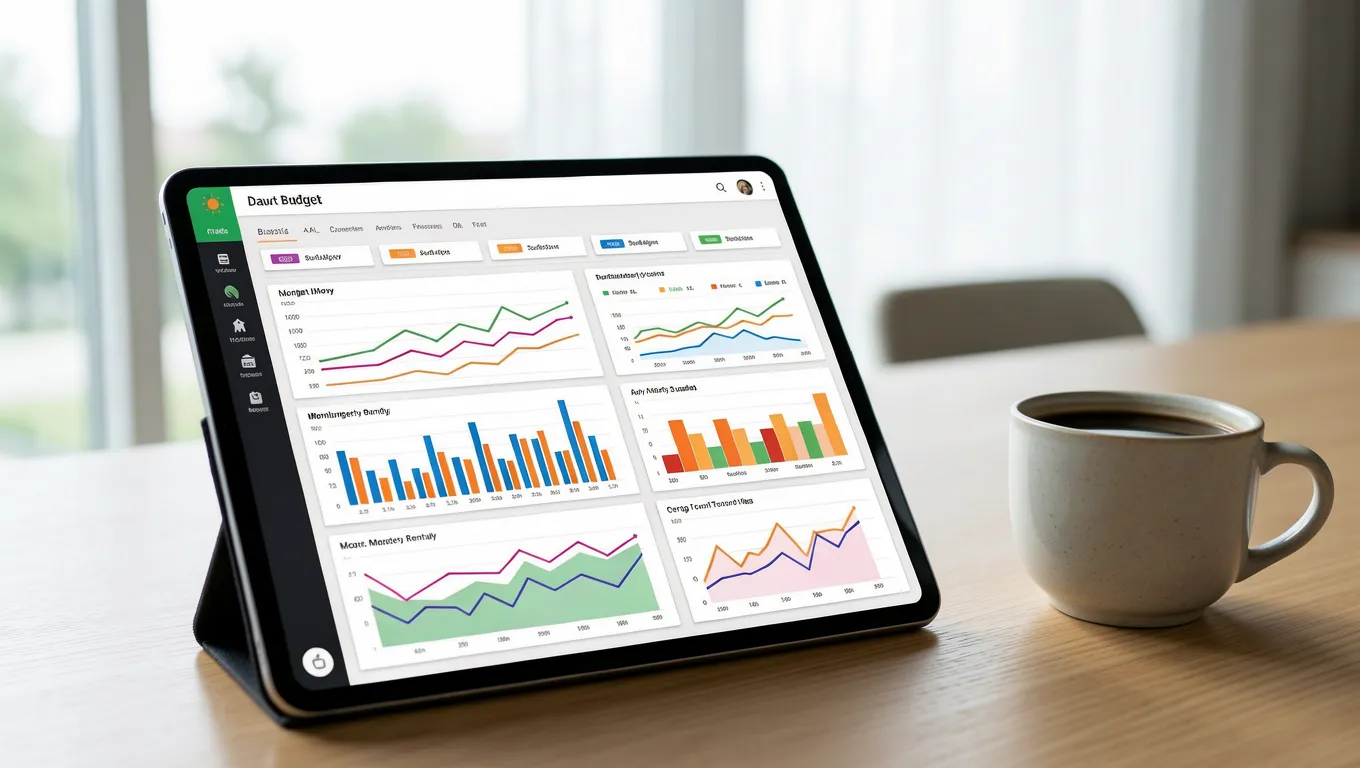
The first step in regaining control is not about paying more; it is about seeing clearly. Most people fail to manage debt because they view their payments as isolated events rather than a single, unified cash flow requirement. To fix this, you must create a 'Master Payment Calendar.' This should include every single due date for the month, regardless of whether that payment is automated or manual.
When it comes to tackling multiple debts, there are two primary psychological and mathematical frameworks: the Debt Snowball and the Debt Avalanche. Deciding which one is right for you depends on whether you value immediate motivation or long-term interest savings.
The Debt Snowball method focuses on your balances. You pay the minimum on everything except the smallest debt. Once that smallest debt is gone, you take its entire payment and add it to the next smallest balance. For example, if you have a $500 medical bill and a $5,000 car loan, you focus all your extra cash on that $500 bill first. The psychological 'win' of seeing an account closed can provide the momentum needed to keep going. However, the trade-off is that you may pay more in interest over time if that small debt has a low interest rate.
Conversely, the Debt Avalanche method focuses on your interest rates. You target the debt with the highest APR first, regardless of the balance size. This is mathematically superior because it minimizes the total amount of money you lose to interest. If you have a credit card at 26% APR and a student loan at 5% APR, you attack the credit card with everything you have. While this is more efficient for your wallet, it can feel like you are making no progress if that high-interest balance is very large. You must decide: do you need the psychological boost of quick wins, or do you have the discipline to stick to a math-based plan?
To make an informed decision, you need to see how interest actually behaves. Many borrowers underestimate how much their monthly payment is actually contributing to the principal balance versus the interest charge. Let's look at three realistic examples of debt in 2026.
Example A: The High-Interest Credit Card
Suppose you have a $5,000 balance on a credit card with a 24% APR. If you only pay the minimum amount required (roughly $150), it could take you over ten years to pay off that debt, and you will end up paying thousands more than you originally borrowed.
Example B: The Standard Auto Loan
Consider a $15,000 auto loan at a 6% APR for 60 months. Your monthly payment would be approximately $290. In this scenario, a much larger portion of your early payments goes toward the principal compared to the credit card example.
Example C: The Personal Loan Consolidation Scenario
If you were to consolidate several high-interest debts into a single personal loan, such as $12,000 at 12% APR for 48 months, your payment would be roughly $315 per month. This simplifies your life by reducing the number of due dates from four or five down to just one, though you must ensure that the total interest paid over those 48 months is less than what you were paying previously.
Once you have chosen a strategy, you need a place to track your progress. Relying on memory or scattered notes is a recipe for disaster. You should implement a 'Single Source of Truth'—one document, one app, or one spreadsheet that houses everything.
A simple decision framework for choosing your tracking method looks like this:
The most significant pitfall in debt management is falling into the 'minimum payment trap.' Lenders set minimum payments at a level that ensures you stay in debt for as long as possible. If you only pay the minimum, you are essentially paying for the privilege of carrying the balance.
Never assume your auto-pay is working correctly without checking your bank statement monthly. This is a critical warning; technical glitches or insufficient funds can lead to missed payments even if you have 'set it and forget it.' A single late payment could potentially impact your credit score, depending on how the lender reports to bureaus like Experian.
Another common mistake is increasing your spending because you feel like you have 'extra' money after making a debt payment. To avoid this, treat your extra debt payments as non-negotiable bills. If you decide to pay an extra $50 toward your principal this month, do it immediately after your paycheck arrives so that the money never has the chance to be spent on something else.
Sometimes, managing multiple payments becomes a losing battle because there are simply too many of them. In these cases, consolidation may be worth exploring. Consolidation involves taking out one new loan to pay off several smaller, higher-interest debts. This can turn five different due dates into one single monthly payment.
However, consolidation is not a magic wand; it is a restructuring tool. It only works if the interest rate on the new loan is lower than the weighted average of your current debts. For example, if you have three credit cards at 25% APR, consolidating them into one personal loan at 14% APR can save you significant money over time. As an alternative resource in Lexington, KY, Credit Repair Fayetteville helps residents connect with various lenders to see what options might be available for their specific profiles.
One expert nuance often missed is the 'rebound effect.' Many people consolidate their credit card debt into a loan, which makes their credit cards look empty and 'available' again. If they then proceed to charge new purchases on those now-empty cards, they end up with both a consolidation loan and new credit card debt. This is how many people find themselves in deeper financial trouble than when they started. Consolidation only works if you also address the spending habits that created the multiple debts in the first place.